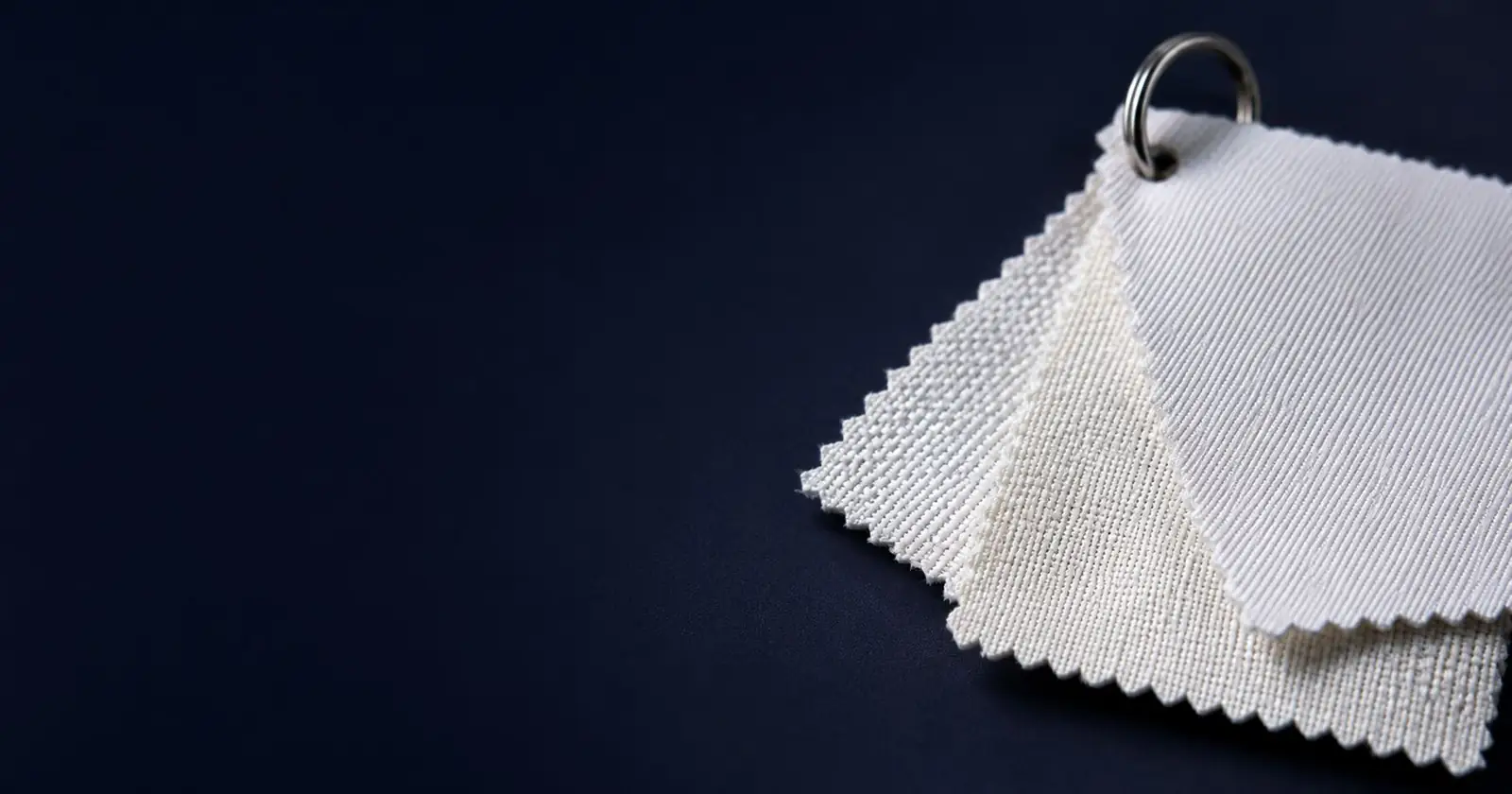
What are taekwondo uniforms made of?
Most taekwondo uniforms are made of polyester, cotton or a blend of the two. In a blend such as 65/35, the first number is usually the share of polyester; always check the label, because some makers write cotton first. Our standard articles come in 65/35 and 50/50 poly-cotton and in 100% cotton. Because we make to order, we can also produce the other fabrics below for your club.
| Fabric | Feel | Shrinkage | Best for | With us |
|---|---|---|---|---|
| 65/35 poly-cotton (65% polyester) | Durable, dries fast, few creases | Low | Club training and beginners: the most popular choice | Standard |
| 50/50 poly-cotton | Softer than 65/35, still easy care | Low to medium | General training | Standard |
| 52/48 poly-cotton | Close to 50/50 with a little more polyester | Low to medium | Mid-range to premium training doboks | On request |
| 65/35 cotton-rich (65% cotton) | Cotton feel with some easy care | Medium | Premium training doboks | On request |
| 100% cotton | Softest, most breathable, natural feel | Highest | Traditional and premium training doboks | Standard |
| 100% polyester, ribbed or diamond weave | Light, quick-drying, textured | Very low | Competition-style and demo-team uniforms | On request |
Swipe the table to see more →
65/35, 50/50 or 100% cotton?
- 65/35 poly-cotton is the safe choice for most clubs: it survives frequent washing, dries fast and keeps its size.
- 50/50 or 52/48 poly-cotton feels more like cotton while staying easy to care for.
- 100% cotton is the most comfortable against the skin, but it shrinks most, especially in the first hot wash or a dryer. Wash it cool.
A cotton taekwondo uniform also absorbs more sweat and takes longer to dry, which matters for clubs that train several times a week. Shrinkage always depends on the fabric's finishing too, so we confirm it for your fabric in the quote.
Polyester
A 100% polyester taekwondo uniform is light and dries quickly. It is common for competition-style doboks, usually with a textured ribbed or diamond weave so the fabric doesn't cling to damp skin. It feels less soft than cotton and is less common for everyday club training.
oz vs g/m²
Taekwondo uniform weight is given in ounces per square yard (oz) or grams per square metre (g/m²). One oz/yd² is about 33.9 g/m². As a rough guide, light competition-style fabrics are often around 110–180 g/m², and training drill around 200–300 g/m²; every maker measures a little differently. Our two standard articles:
- Lightweight taekwondo uniform, 6.5 oz: 6.5 oz/yd², about 220 g/m², construction 14x14 / 68x38
- Heavyweight taekwondo uniform, 8.5 oz: 8.5 oz/yd², about 288 g/m², construction 16x10 / 108x48
8.5 oz carries 31% more fabric per m²
The heavier drill is stiffer and lasts longer. The lighter one is cooler for summer training and for beginners. How to choose a weight
Weaves: drill, ribbed, diamond
Drill is a strong twill weave with fine diagonal lines. It is hard-wearing and keeps its shape, which is why our standard articles use it. Ribbed and diamond weaves have a raised texture that touches less skin, so they feel cooler and cling less when damp; they are typical of light polyester doboks.
The construction figures (for example 14x14 / 68x38) describe the yarn thickness and how many threads run each way per inch. Higher thread counts make a denser, smoother fabric.
Fabric for competition uniforms
Fabric alone does not make a competition uniform. World Taekwondo requires WT-recognised uniforms and equipment at competitions on its events calendar (WT guideline on recognised products), and its uniform guidelines call for quick-drying, breathable, elastic fabric (WT guidelines of identification). Our uniforms are made for training, gradings and club events; see do you need an approved dobok?
Dobok fabric vs karate gi fabric
Don't confuse the two. Karate gis are often made of heavier canvas or brushed cotton, built for grabbing and sharp arm movements. Taekwondo doboks favour lighter fabric so the legs can kick freely.
What makes a dobok snap?
The “snap” is the sound the jacket and trousers make when you kick or punch sharply. It comes from stiff, heavy fabric moving fast, not from snaps or press studs. Heavier drill makes a louder snap; a light uniform is quieter.
Can you put snaps on a taekwondo uniform?
A tailor can add press studs, but they won't make the sound people mean. The snap comes from the fabric itself, so choose a heavier weight.
Why does my taekwondo uniform look messy whenever I kick?
A thin uniform moves with every kick and creases. A heavier, stiffer jacket keeps its shape and looks sharper at gradings. A correctly tied belt also helps hold the jacket in place.
Which fabric should your club order?
- Kids and beginners: 65/35 poly-cotton in the lighter 6.5 oz weight.
- Adults training several times a week: 65/35 or 50/50 poly-cotton in 8.5 oz.
- Premium or traditional feel: 100% cotton, or cotton-rich 65/35.
- Demo teams and events: light 100% polyester with a textured weave.
Not sure? Order a sample in two fabrics and compare, or tell us in your quote request.